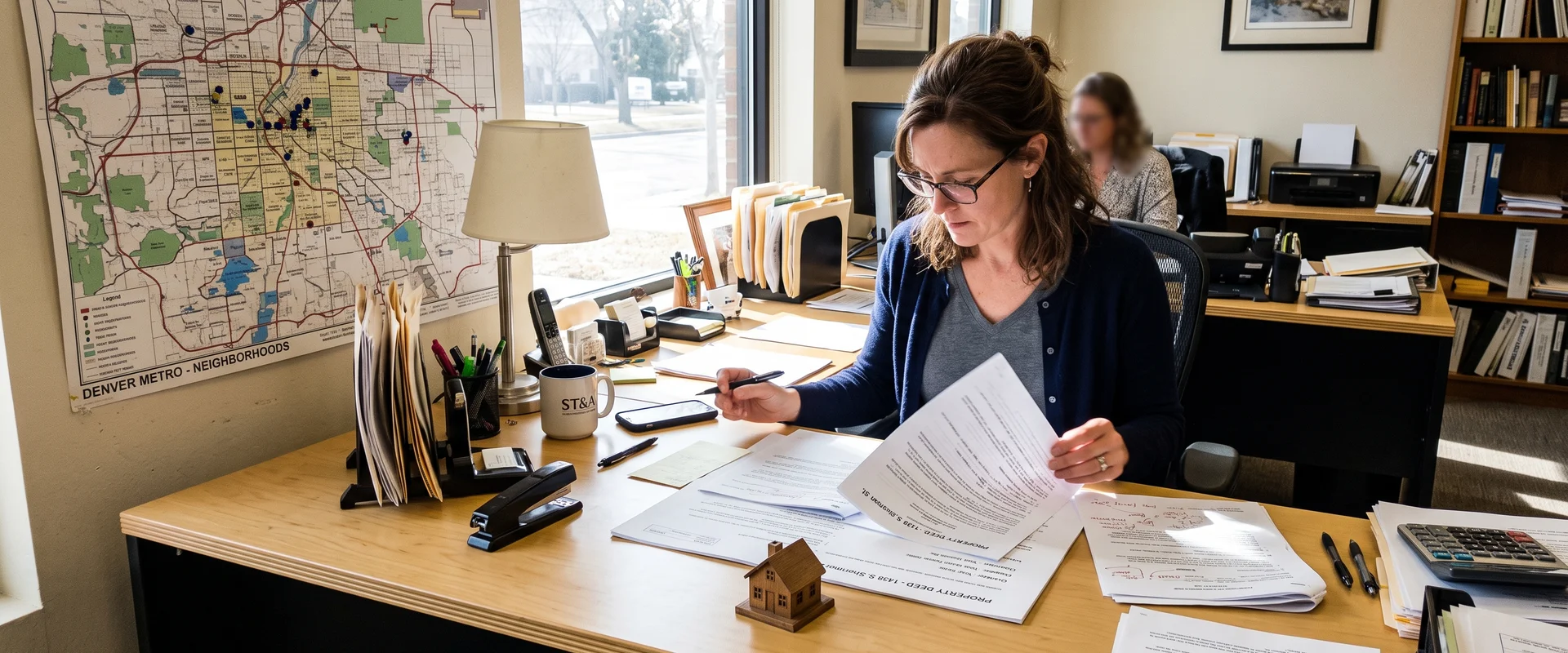
Real Estate & Title Attorneys in United States
How NJ real estate and title attorneys handle closings, deeds, and title issues, what to look for, and how our rankings compare 36 local firms.
A real estate and title attorney handles the legal side of buying, selling, or refinancing property in New Jersey: reviewing the contract of sale, running or reviewing the title search, clearing liens or judgments that show up on that search, preparing the deed and closing documents, and either running the closing itself or coordinating with a title company that does. New Jersey is one of the few states where an attorney review period is standard practice on residential contracts, so these firms are involved earlier than a typical closing attorney elsewhere, often from the moment an offer is accepted.
What this covers
Work in this category includes contract review and negotiation during the attorney review period, title search and title insurance coordination, resolving clouds on title such as old mortgages, mechanic's liens, or estate issues, deed preparation and recording, escrow handling, and attending or running the closing. Some firms also handle short sales, new construction closings, and commercial property transfers.
What to look for in a firm
- Local title knowledge: familiarity with the county clerk's office and recording quirks in your specific New Jersey county.
- Responsiveness during attorney review: this window is typically just a few business days, so slow replies can cost you contract leverage.
- Clear, flat fee quotes: most residential closings are billed flat rather than hourly, and a firm that won't quote a number upfront is a yellow flag.
- Experience with your deal type: a firm that mainly does refinances may move slower on a purchase with a tight closing date, and vice versa.
How our scoring works
We score all 36 firms in this category on factors like responsiveness, client feedback, transparency around fees, and track record with closings similar to yours, then rank them side by side. See the full breakdown on our methodology page, or go straight to the ranked guide to the best real estate and title attorneys in New Jersey to compare firms and pick one that fits your timeline and budget.
Connect with real estate & title attorneys
Free and no obligation. Tell us what you're facing and we'll match you with the right legal team in your area.
All real estate & title attorneys, ranked by score and relevance
We found 96 businesses offering real estate & title attorneys; 86 met the criteria for the scored directory. The order weighs each business's overall score by how much of its reviewed work is real estate & title attorneys, so a lower-scored specialist can rank above a higher-scored generalist. Filter and sort below, or open the full map view.































































When you submit a quote or contact form here, your enquiry may be passed to one or more partner providers to complete the work. We may receive a referral fee for these introductions, but our rankings and scores are based solely on our published methodology and are never affected by referral fees.
Common questions about real estate & title attorneys
- How much does a real estate attorney cost for a closing in New Jersey?
- Most NJ residential closings are billed as a flat fee rather than hourly, commonly running from a few hundred dollars up into the low four figures depending on the firm, the county, and whether title issues need to be cleared. Get a written quote before you sign anything, and ask whether it covers attorney review, the closing itself, and any follow-up recording work.
- Do I actually need an attorney to buy or sell a home in New Jersey?
- New Jersey doesn't legally require an attorney for a residential closing, but it's standard practice, and most contracts include an attorney review period specifically so a lawyer can check the terms before you're locked in. Given how common title problems and negotiation issues are, going without one is unusual and generally not advised.
- What should I expect during the attorney review period?
- After an offer is accepted, both sides' attorneys typically have three business days to review and request changes to the contract, covering things like inspection contingencies, closing dates, and included fixtures. Respond to your attorney's calls and emails quickly during this window since it's short and any requested changes need to be resolved before it closes.
- How do I judge whether a real estate attorney did a good job?
- Look at whether the title search caught and resolved any liens or judgments before closing, whether the closing happened on schedule with no last-minute surprises, and whether fees matched what was quoted upfront. A good sign afterward is a clean, recorded deed and no unresolved paperwork lingering weeks later.
Guides to choosing real estate & title attorneys
- Do you need a real estate attorney to buy or sell a home?
When a real estate attorney is worth hiring for a home purchase, sale, or closing, what they actually do, and how that differs from a title company or agent.
- What happens to a mortgage after divorce or the death of a spouse
How a mortgage is affected by divorce or the death of a spouse, who remains responsible for payments, and the steps to protect the home from foreclosure risk.